
By Dr. Malik Sherjeel Awan, PsyD, CEO of MSA & Co, Makkah · Last checked 22 November 2026
Published by Dr. Malik Sherjeel Awan, Makkah
Many pilgrims combine Umrah with a visit to Madinah, the city of the Prophet ﷺ. Visiting Madinah is not one of the rites of Umrah, but for many it is one of the most moving parts of the journey.
With limited days, it helps to plan. This guide suggests a simple, calm approach to a ziyarat day, built around the prayers and grounded in authentic hadith.
Start with Masjid an-Nabawi
The Prophet’s Mosque is the heart of any visit. The Prophet ﷺ said: “One prayer in my Mosque is better than one thousand prayers in any other mosque excepting Al-Masjid-Al-Haram.” (Sahih al-Bukhari 1190; Sahih Muslim 1394)
Most pilgrims find it best to build the day around the five daily prayers in Masjid an-Nabawi, and fit visits in between.
The Rawdah
The Prophet ﷺ said: “Between my house and my pulpit there is a garden of the gardens of Paradise.” (Sahih al-Bukhari 1196; Sahih Muslim 1391)
Visits to the Rawdah are organised with a permit. The Ministry of Hajj and Umrah says the permit is issued through the Nusuk app and website, where you choose a date and time slot. Book as early as you can, and arrive on time with your permit ready. Our sister site explains the steps in its guide to visiting the Rawdah.
Masjid Quba
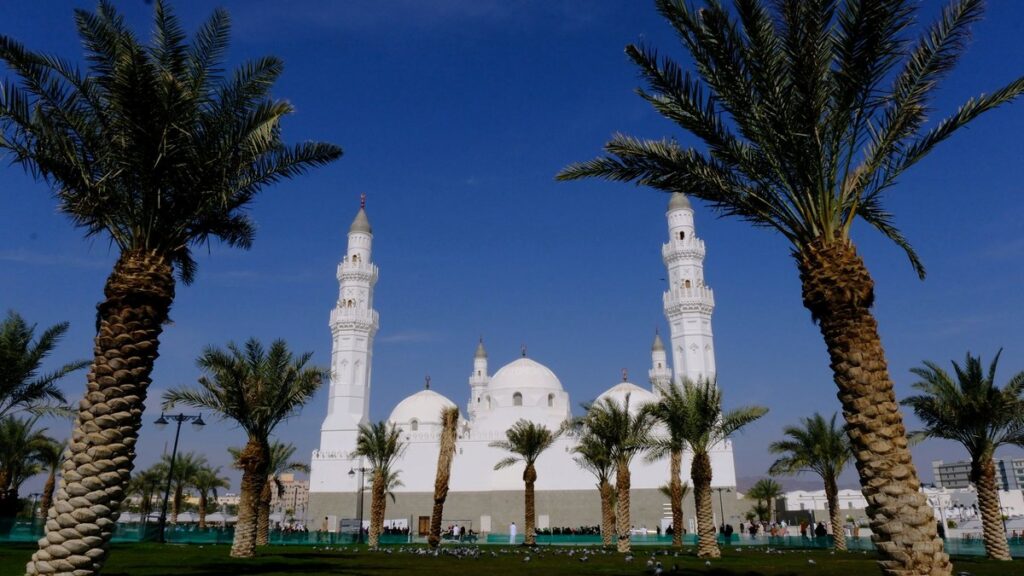
Masjid Quba holds a special place in the Sunnah. Abdullah ibn Umar reported: “The Prophet ﷺ used to go to the Mosque of Quba every Saturday (sometimes) walking and (sometimes) riding.” (Sahih al-Bukhari 1193; see also Sahih Muslim 1399)
Many pilgrims visit Quba in the morning, when it is cooler. Pray there, take your time, and avoid rushing back for the next stop.
Uhud
Mount Uhud is the site of the Battle of Uhud, an important event in the early history of Islam. Many pilgrims visit to reflect on the lessons of that day and the sacrifices of the Companions. Pray for them, and take care in the heat, as there is often little shade.
A suggested ziyarat day
This is a gentle outline, not a fixed timetable. Adjust it to prayer times on the day and your group’s energy.
- Fajr in Masjid an-Nabawi. Stay for dhikr and Qur’an if you can.
- Breakfast and rest at your hotel.
- Mid-morning: Masjid Quba. Pray, reflect and return without rushing.
- Dhuhr in Masjid an-Nabawi.
- Lunch and rest in the hottest part of the day.
- Late afternoon: Uhud, if your group has energy, returning before Maghrib.
- Maghrib and Isha in Masjid an-Nabawi. If you have a Rawdah permit, plan around your slot.
If you have several days in Madinah, spread the visits out. A slower pace often means a more meaningful visit.
Practical tips
- Heat. The Saudi Ministry of Health advises pilgrims, especially older people, to avoid direct sun exposure and to drink sufficient fluids. Carry water and an umbrella or hat.
- Transport. Use licensed taxis or a pre-arranged driver. Agree the plan in advance, including waiting time.
- Group plans. Agree a meeting point at every stop, and keep phone numbers on paper as well as on your phone.
- Respect and calm. Keep voices low in the mosques, keep walkways clear, and follow staff guidance.
- Footwear. Comfortable, broken-in shoes or sandals make a big difference.
Planning for older pilgrims and children
A ziyarat day can be long and hot. If your group includes older parents, people with health conditions or young children:
- Shorten the plan. Visit one site in the morning and rest in the afternoon, rather than trying to do everything in one day.
- Use transport wisely. A car or taxi that waits for you is easier than finding new transport at each stop.
- Plan breaks. Build in time for meals, water and rest between prayers.
- Carry essentials. Medicines, water, a small snack, a hat or umbrella, and copies of hotel details.
- Ask about wheelchairs in advance if walking is difficult.
Our sister site has more practical advice for families in its guide to visiting Quba, Uhud and Masjid al-Qiblatain.
Keep it authentic and simple
Ziyarat is about reflection, prayer and connection with the history of Islam. Focus on what is established in the Qur’an and authentic Sunnah, and if you have questions about any practice, ask a qualified scholar.
How MSA & Co can help
Our services include ziyarat tours to sacred and historical sites in Madinah, with transport and guides. You can also read our overview of tourism in Saudi Arabia.
Frequently asked questions
Is visiting Madinah part of Umrah?
No. Umrah is performed in Makkah. Visiting Madinah is a separate, much-loved journey that many pilgrims combine with Umrah.
Do I need a permit for the Rawdah?
Yes. The Ministry of Hajj and Umrah issues Rawdah permits through Nusuk, with a date and time slot.
How many days should I spend in Madinah?
It depends on your schedule. Even two or three days allows a calm visit to the main sites around the daily prayers.
What is the best time of day to visit Quba?
Many pilgrims prefer the morning, when it is cooler and before the hottest part of the day. Check prayer times and plan to return to Masjid an-Nabawi for Dhuhr if you wish.
Can I visit Uhud in the afternoon?
Yes, but avoid the hottest hours, carry water and shade, and leave enough time to return before Maghrib.
Sources
- Sahih al-Bukhari 1190: https://sunnah.com/bukhari:1190 ; Sahih Muslim 1394: https://sunnah.com/muslim:1394
- Sahih al-Bukhari 1196: https://sunnah.com/bukhari:1196 ; Sahih Muslim 1391: https://sunnah.com/muslim:1391
- Sahih al-Bukhari 1193: https://sunnah.com/bukhari:1193 ; Sahih Muslim 1399: https://sunnah.com/muslim:1399
- Ministry of Hajj and Umrah, Rawdah permit: https://haj.gov.sa/en/E-Services/Permit-to-Visit-Al-Rawdah-Al-Sharifiyah-for-Men-Women
- Saudi Ministry of Health, “Health Requirements and Recommendations for Travelers to Saudi Arabia for Umrah 1447H (2026)”: https://www.moh.gov.sa/en/HealthAwareness/Pilgrims-Health/Documents/Health-Regulations-Umrah-EN.pdf